John 2:1-11
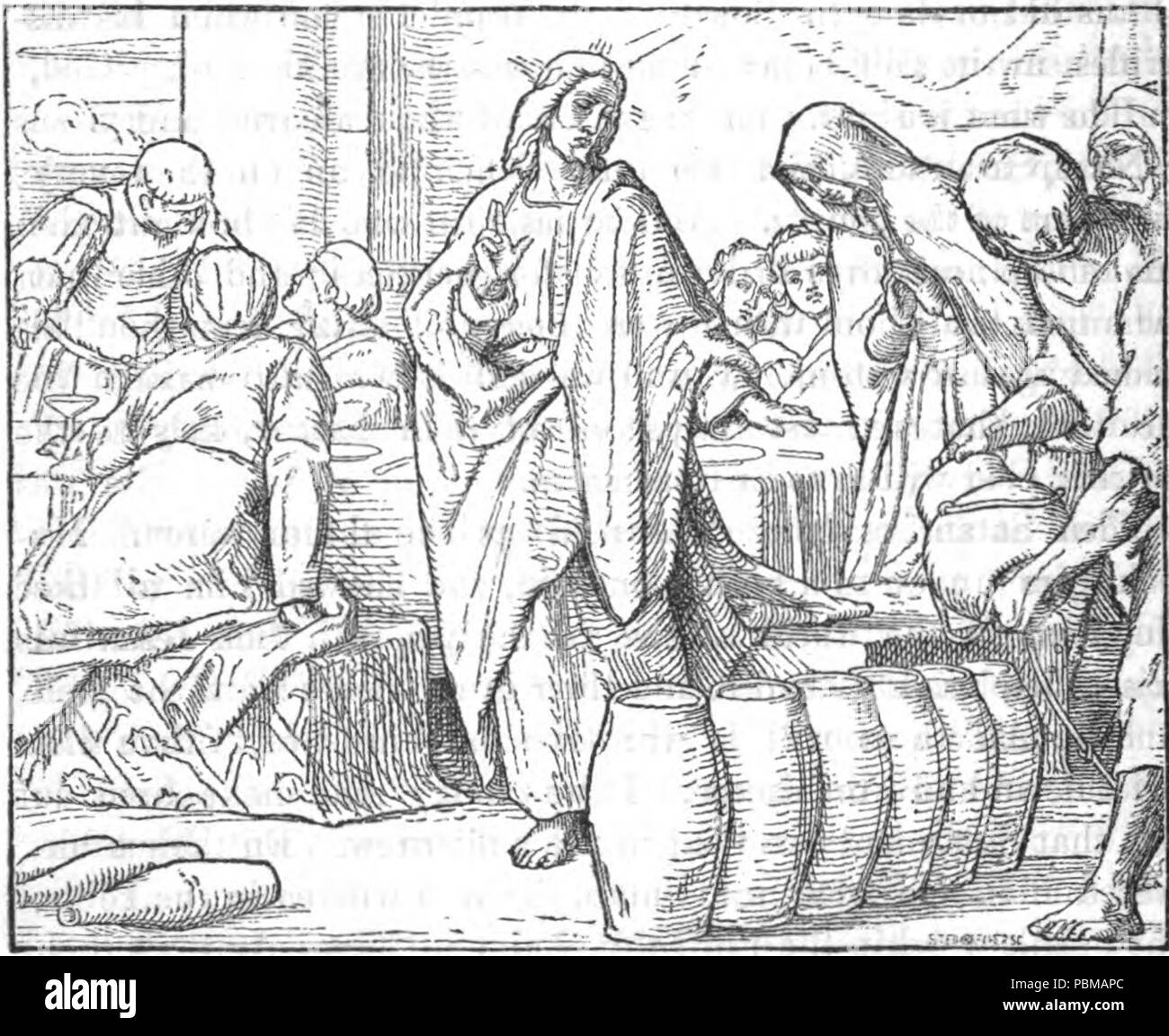
There was a wedding at Cana in Galilee, and the mother of Jesus was there. Jesus and his disciples were also invited to the wedding. When the wine ran short, the mother of Jesus said to him, “They have no wine.” And Jesus said to her, “Woman, how does your concern affect me? My hour has not yet come.” His mother said to the servers, “Do whatever he tells you.” Now there were six stone water jars there for Jewish ceremonial washings, each holding twenty to thirty gallso. Jesus told them, “Fill the jars with water.” So they filled them to the brim. Then he told them, “Draw some out now and take it to the headwaiter.” So they took it. And when the headwaiter tasted the water that had become wine, without knowing where it came from – although the servers who had drawn the water knew – , the headwaiter called the bridegroom and said to him, “Everyone serves good wine first, and then when people have drunk freely, an inferior one; but you have kept the good wine until now.” Jesus did this as the beginning of his signs at Cana in Galilee and so revealed his glory, and his disciples began to believe in him.
I have always found great inspiration in the story of the Wedding at Cana. There are several themes to consider here.
The first, of course, is that Jesus graces a couple’s wedding with His presence. This is a critical thing. The Church regards marriage as a sacrament and does so because of the example of Jesus in gracing this wedding with His presence. In doing so, Jesus communicates by His presence the significance of marriage. It is to be celebrated, and it is to be infused with His presence.
Catholic marriage is a sacrament between a man and a woman who make an exclusive and permanent commitment to each other in Christ. Their lives are no longer merely their own, but they belong to each other, and that belonging is centered and founded on the presence of Christ in their marriage.
Marriage is a sacrament because it is an instrument by which God pours out His grace. Christ does so here in the wedding at Cana, and it is the faith of the Church that Christ does so at every wedding, and within the confines of every marriage. It is not just the wedding that is the sacrament, but the marriage. So, every day of married life God uses that marriage to pour out His grace to those who are united as one in Him. We should keep that in mind, perhaps especially when the days of marriage seem long and unbearable. This is an instrument of God’s grace! What is the goal of that grace? Nothing less than our salvation. The purpose of marriage is heaven!
Marriage is a university of love in that it is where a man and a woman learn to love each other, which is to say learn to be committed to the promises they’ve made to each other, both in good times and in bad, in sickness and in health, in prosperity and in times of barely getting by. Giving up on each other is easy. The hard part of marriage is sticking it out when you learn, too quickly in most cases, that the other is not the fairy tale image of a spouse that you had hoped he or she would be. That is when the work of really loving each other begins – and it is through that work that the joy of marriage as an instrument of God’s grace can be fully realized.
When Margaret and I were doing marriage prep many years ago, this passage would often be read at the Saturday gatherings for engaged couples. I would ask them, “Why was Jesus at this wedding?” I was surprised at how many struggled to answer that simple question. Of course, the answer is, “Jesus was at the wedding because He was invited!” Jesus doesn’t crash weddings. He only comes when He is invited. So, invite Jesus to your wedding. Invite Jesus to your marriage. Even if you’ve been married twenty, thirty, forty, fifty years, it’s not too late to invite Jesus to be a part of your married life together. If you are married in the Church, the whole idea is that Jesus is what unites the two of you in marriage. You are no longer two, but one in Christ.
Vocation is where the rubber of faith meets the road of real life, where one lives out one’s commitment to Christ in the concrete. Marriage is a vocation where one lives out their commitment to Jesus in the concrete by how he or she lives out their commitment to their spouse. How one treats his or her spouse is how he or she treats the Lord, because the two are one in Christ.
How you treat your wife or husband is how you treat the Lord Jesus. How you treat your wife or husband is how you treat the Lord Jesus. Marriage is a sign of Christ’s presence. And where is Christ present? In the union of the two in one. There is Christ present. Believe it. It is our faith. Act on it. We will be held accountable.
A second theme to consider when reading this Gospel is the role of Mary in our Christian lives. I love the interaction between Mary and Jesus here. This is the first of seven “signs” that Jesus will perform throughout the Gospel According to John, each sign manifesting His divine identity. It is significant that this first sign and, indeed, Jesus’ public ministry, is initiated at the request of His Mother. Mary comes to Him with a problem: they have no wine. Jesus responds tersely, “What is that to you and me?” Of course, to a Mother who knows the responsibility of a host to their guests, and the subsequent embarrassment and humiliation, the loss of reputation the host would suffer if all doesn’t go well – what is it to you and me? It’s everything! Jesus is essentially telling His Mother, “This isn’t my problem.” Mary tells Him, “I’m making it your problem. Why? Because I know who you are. I know why you’re here. I know you are here to save, and this situation needs saving.”
What is striking is that Mary doesn’t wait for Jesus to reply. She turns to the servants and says, “Do whatever he tells you.” She knows how He will reply. She knows His heart, and that such a heart cannot turn away when others are in need. Jesus doesn’t think twice. He answers His Mother’s request, not simply with a bit of wine – but with wine overflowing! The jars described in the story hold 120 to 180 gallons of wine. A great abundance of wine was a sign of God’s presence and newness of life. Here we have a great abundance of wine signifying God’s presence in the world in the person of Jesus celebrating new life in the world in the marriage of this young couple.
Mary is our Mother, too. Mary is our intercessor. She will go to Jesus with our needs. She will go to Jesus when we need to be rescued. She will bring our needs to Him. It is for us to listen to her when she instructs us, “Do whatever he tells you.”
How do we know what Jesus tells us? We read His Word. The Scriptures are for us the word of God given to us today. When we read the Word of God, when we reflect on the Scriptures, we can be assured that His word given to us today is what we need to hear.
Next Sunday is Word of God Sunday, established by Pope Francis in 2019, it is meant to set aside one Sunday of the year to reflect on what the Word of God means to us and how it impacts our life. But the Word of God cannot impact our lives if we are not reading it, meditating on it, praying over it, and reflecting on how to live out the Word of God in our everyday.
There are multiple ways to do this: read the readings for the Mass of each day; find a reflection book for the season of the year; listen to Fr. Mike Schmidt’s Bible in a Year podcast; simply open your Bible and read for ten, fifteen, thirty minutes at the beginning or end of the day and reflect on how to live the Gospel more fully in the concrete circumstances in which we live our lives.
If we do this, simply taking a few moments to read God’s word each day, we will be surprised at how it comes to permeate everything we do: how we think, how we act, how we plan, how we respond to what life throws at us. Armed with the Word of God in our minds and hearts, our lives can truly be transformed so that we can live meaningfully the words of our Blessed Mother: “Do whatever He tells you.”
Be Christ for all. Bring Christ to all. See Christ in all.
 Thoughts and Prayers for the Faithful