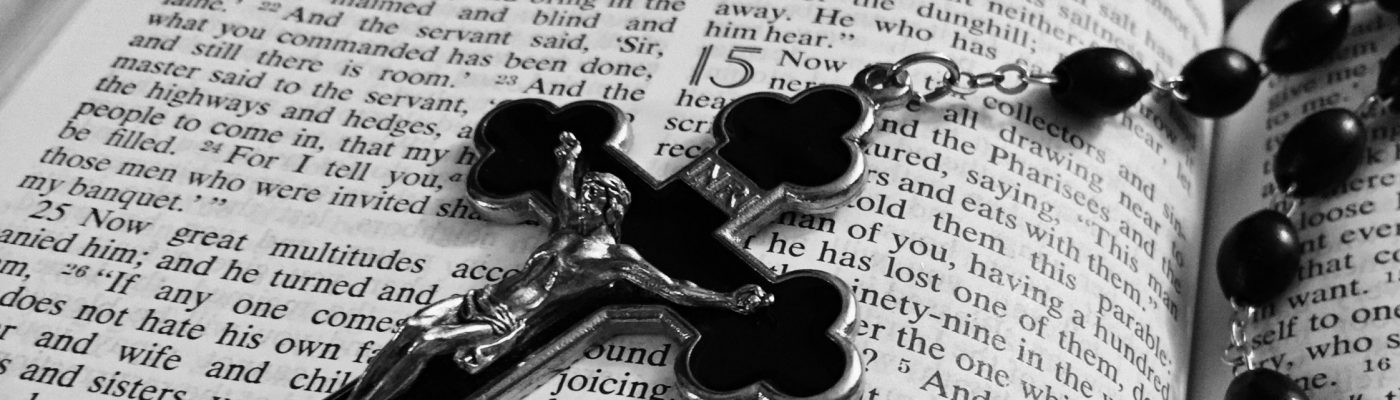

Today, March 5, is Ash Wednesday, the first day of Lent.
Lent is a season of penance in preparation for Easter, when Christians celebrate the Resurrection of Jesus Christ.
To prepare for Easter, Christians of various traditions exploit the season of Lent to grow in holiness by means of prayer, fasting, and almsgiving. This dedication to growth in holiness begins by remembering our mortality – hence the ashes placed on one’s forehead with the invocation, “Remember that you are dust, and to dust you shall return.” Recalling our mortality inspires us to work toward that day when we will meet death, so that that day is not merely a day of death, but even moreso of new life.
One of the points of the Gospel According to John is that eternal life does not begin when we die. Rather, it begins when we are baptized. As such, all of us baptized are living eternal life now. Death is simply the transition from living that eternal life in this temporal realm to living it in the heavenly realm. Much like when we are conceived. Temporal life does not begin when we are born from our mother’s womb, but when we are conceived in her womb. Birth is simply the transition from life in utero to life ex utero. But it is the same life. If unborn babies could reason, it may be that they would wonder if there is even such a thing as “life after birth,” just as we wonder if there is “life after death.” From our perspective, we would tell those in utero, “of course there is life after birth!” From their perspective, the saints in glory, and even those suffering damnation, would tell us living our earthly life, “of course there is life after death!” It may be that those suffering damnation, like Lazarus in Luke’s Gospel (16:19-31), would beg those in glory to go to their loved ones to reveal to them the truth of things so they might avoid damnation. Sadly, I suspect Father Abraham is correct in insisting that those relatives wouldn’t believe them.
There is a tradition of “giving things up” for Lent. Many people give up chocolate, or caffeine, or television, or watching the news, etc. There has been a recent tradition of not only “giving things up” for Lent but of “taking things on,” such as reading the Bible or a spiritual book, daily Mass, daily rosary, or what have you. I like this new tradition, though I don’t discourage the old (so long as, as one priest recommended long ago, we’re not “giving up” things we shouldn’t be doing in the first place!). Giving things up can certainly be a way of reminding ourselves of our mortality, and that’s not a bad thing. The idea, too, is to make a sacrifice in order to remember Christ’s sacrifice for us. I don’t know if giving up candy is a serious way of doing that. Perhaps for children, but not so much for adults. Taking things on, however, can be a conscious effort to align ourselves more with the will of God and the values of the Gospel.
Whatever you do for Lent, let it be a way of bringing to mind the sacrifice of Christ for our salvation, as well as preparing ourselves for that day when the inevitable comes. Our lives are not merely our own. Lent is a good time to think about that, and act in such a way that we know it is true.
Be Christ for all. Bring Christ to all. See Christ in all.
 Thoughts and Prayers for the Faithful