
Second Reading: Revelation 21:1-5a
Then I, John, saw a new heaven and a new earth. The former heaven and the former earth had passed away and the sea was no more. I also saw the holy city, a new Jerusalem, coming down out of heaven from God, prepared as a bride adorned for her husband. I heard a loud voice from the throne saying, “Behold, God’s dwelling is with the human race. He will dwell with them and they will be his people and God himself will always be with them as their God. He will wipe away every tear from their eyes, and there shall be no more death or mourning, wailing or pain, for the old order has passed away.” The One who sat on the throne said, “Behold, I make all things new.”
Gospel: John 13:31-33a, 34-35
When Judas had left them, Jesus said, “Now is the Son of Man glorified, and God is glorified in him. If God is glorified in him, God will also glorify him in himself, and God will glorify him at once. My children, I will be with you only a little while longer. I give you a new commandment: love one another. As I have loved you, so you also should love one another. This is how all will know that you are my disciples, if you have love for one another.”
John’s vision described here in the Book of Revelation is of the new heaven and new earth that represent the culmination of God’s kingdom. The old order has passed away. The sea is no more. The sea here represents the dwelling place of the beast, the place of darkness and chaos. It will be gone, for in this new heaven and new earth there will be no chaos, no darkness, and the forces of the evil one will have no sway.
The holy city, the heavenly city, Jerusalem, comes down from heaven. This is where God dwells among His people in the temple. Jerusalem comes down from heaven. We traditionally think of going up to heaven when we die in Christ. But here the holy city of God comes down from heaven. God will dwell in that city with His people, in the new heaven and new earth that will be a part of God’s redemptive plan.
When we die, we will come before Jesus our Judge for the particular judgment. This is where we stand before Christ and He judges us as righteous or unrighteous. If we follow Christ and remain faithful to Him, take up our cross and follow Him, unite our sufferings with His, and put our hope in the joy of the resurrection, then Christ will judge us as righteous and bring us in to His heavenly abode where, along with the Blessed Virgin, the saints and angels, we will see God face-to-face in what is called the beatific vision, while we await the consummation of God’s plan of redemption.
The CCC says in paragraph 1022: “Each man receives his eternal retribution in his immortal soul at the very moment of his death, in a particular judgment that refers to his life in Christ: either entrance into the blessedness of heaven – through a purification or immediately – or immediate and everlasting damnation.”
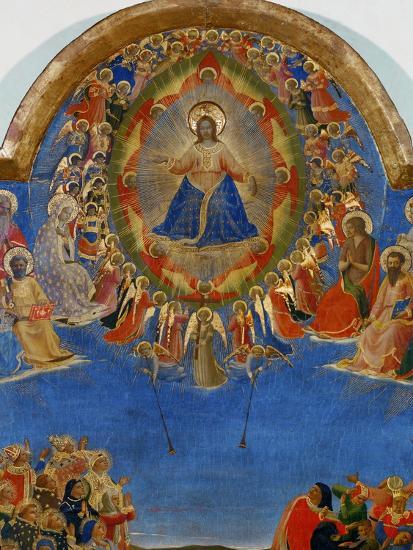
At the end of time, there will be the Last Judgment. Of the Last Judgment, the CCC says in paragraph 1038: “The resurrection of the dead, ‘of both the just and the unjust’ (Acts 24:15), will precede the Last Judgment. This will be ‘the hour when all who are in the tombs will hear [the Son of man’s] voice and come forth, those who have done good, to the resurrection of life, and those who have done evil, to the resurrection of judgment’ (John 5:28-29).”
Christ will come in glory at this time, with all His angels, and He will separate the righteous from the unrighteous. The unrighteous will go to eternal punishment, and the righteous to eternal life (Mt 25:31, 32, 46).
Why, if there is a particular judgment when the eternal destiny of each is revealed, will there be a Last Judgment? Three reasons: First, to reveal for all to see the fullness of God’s justice and glory. At the Last Judgment, the CCC says in paragraph 1040: “We shall know the ultimate meaning of the whole work of creation and of the entire economy of salvation and understand the marvelous ways by which [God’s] Providence led everything toward its final end. The Last Judgment will reveal that God’s justice triumphs over all the injustices committed by his creatures and that God’s love is stronger than death.”
Second, at the Last Judgment, the full implications and consequences of the good and evil we have done will be realized. The impact of our good deeds, as well as our evil acts, on our children, our spouses, our friends and loved ones, the Church and the larger community down through the years will be fully revealed to us.
Finally, Christ came not to save souls, but to save persons, and persons are body and soul. At the particular judgment, our souls alone will stand before Christ in judgment. But at the Last Judgment, our bodies will have been resurrected and united once more with our souls. It is fitting that as body and soul, as full persons, we will be judged at the Last Judgment.
It is the faith of the Church that God will create a new heaven and a new earth at the end time where He will dwell with His people. “Behold, I make all things new.” The divine presence of God, what the ancient Hebrews called the Shekhinah, dwelt among the Hebrews in the tent they carried with them throughout the forty years in the desert, setting it up where God told them. In this tent was the Ark of the Covenant, and in the Ark was the Ten Commandments, the staff of Aaron, and the manna, the bread of heaven. Where God told Moses to set up the tent, Moses did, and God’s presence came over and within the tent.
God dwelt with His people in the temple, built by Solomon. After building the temple, Solomon prayed: “The LORD intends to dwell in the dark cloud; I have built you a princely house, the base for your enthronement forever … Is God to dwell with human beings on earth? If the heavens and the highest heaven cannot contain you, how much less this house which I have built!” (2 Chr 6:1-2, 18).
Then John’s Gospel tells us that “the Word became flesh and dwelt among us,” (Jn 1:14a) literally “pitched His tent” among us. God’s Shekhinah was present in Jesus of Nazareth in a wholly new way, as the incarnation of the Second Person of the Holy Trinity. He came among us as one of us, like us in all things except sin. He was Emmanuel – “God with us.” When He ascended into heaven, He promised that He would send the Holy Spirit to guide us in all things necessary for our salvation, and gave us the promise, “I am with you always, until the end of the age” (Mt 28:20b).
Just so, at the end of the age, God will dwell among us: “Behold, God’s dwelling is with the human race. He will dwell with them and they will be his people and God himself will always be with them as their God.” In God’s dwelling with His people, in the new Jerusalem come down from heaven, God “will wipe away every tear from their eyes, and there shall be no more death or mourning, wailing or pain, for the old order has passed away.”
In the Gospel reading today, Christ speaks of His glory. “Now is the Son of Man glorified, and God is glorified in him.” In the Scriptures, the Lord’s glory is a manifestation of His presence, and Jesus as Son of Man refers to Him as the one who comes down from heaven to reveal the Father, and the one who is sacrificed for the world’s salvation. So here we have again the promise of God’s presence, His Shekhinah, among us. God the Father is glorified in Christ’s act of loving obedience and sacrifice, and the Father will glorify Christ by raising Him from the dead and sitting Him in glory at His right hand.
But before all of this, Christ must prepare His disciples, to prepare us, for the time when He will be physically absent, from the time of His death on the cross until His resurrection, and then again from the time of His ascension into heaven until His second coming. To prepare them He gives them a new commandment: love one another. As Jesus loves us, we are to love one another. This radical love, a love manifested in obedience to the will of the Father out of love for God and in imitation of Jesus’ self-giving sacrifice on the cross out of love for others, is to be the defining characteristic of a disciple of Jesus. How can we love as Jesus loved? By participating in His sacrifice.
This is what we do at every Mass. At every Mass, the one sacrifice of Christ is made present on this altar, so that those gathered may participate in that sacrifice. We come to the altar bringing our sins, our failures, but also our renewed dedication to live the life of Gospel joy. We place all of that on the altar of Christ as we remember His sacrifice and receive Him into ourselves, becoming more like Christ as we do so. We then take the Christ we have become out into this world so sorely in need of Him. We are the presence of Christ, the Shekhinah of God, in this place, in this time.
This is what it means to love one another: to be the presence of Christ in this world. If we are conscious of who we are in this world, conscious of our mission to be Christ in this world, then our own lives will be transformed and the glory of God will be revealed through us. And we can have confidence that, when Christ comes again and we stand before Him in judgment, He will have prepared for us our place in that new heaven and new earth.
Be Christ for all. Bring Christ to all. See Christ in all.
 Thoughts and Prayers for the Faithful