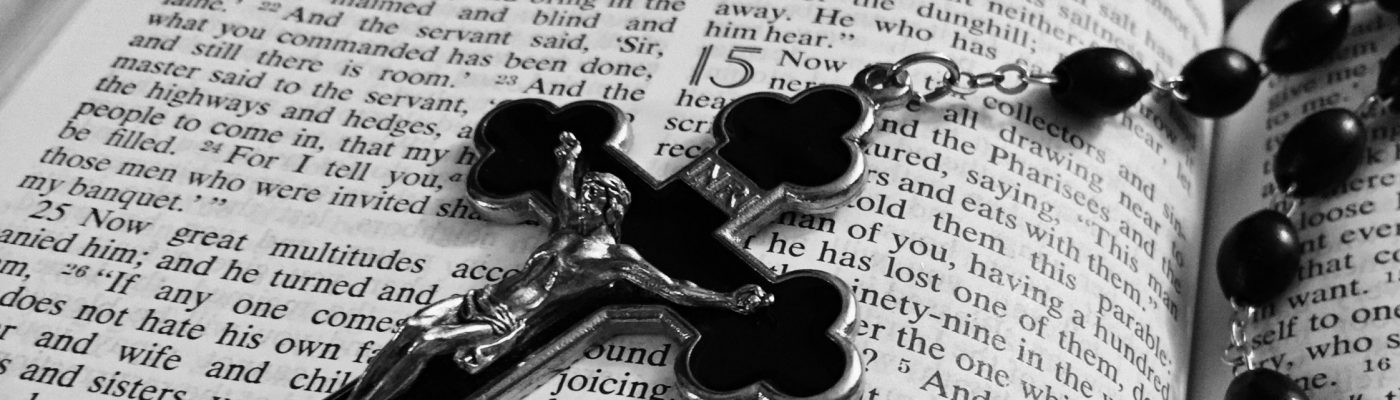

St. Maximilian Kolbe has quickly become one of the most popular saints in the Catholic Church. Why? Because of his self-sacrifice for the sake of another. Because Kolbe embodied the words of Jesus who said, “Greater love has no man than this, that a man lay down his life for his friends” (John 15:13).
Raymund Kolbe was born into poverty on January 8, 1894 in Zdunksa Wola in the Kingdom of Poland (then part of the Russian Empire). Raymund was a religious child even from his earliest years and he recounts receiving a vision of the Virgin Mary as a child. Tragedy struck the lives of the Kolbe family when, in 1914, Raymund’s father was captured by the Russians and hanged for fighting for an independent Poland.
At the age of 13, Raymund and his brother began their studies in the Conventional Franciscan seminary in Lwow, which was in Austria-Hungary. In 1910, Raymund was given the religious name Maximillian and began is initiate. Final vows came in 1914. Kolbe went to Rome soon after where he earned his doctorate in philosophy and the Pontifical Gregorian University in 1915. He also earned a doctorate in theology from the University of Saint Bonaventure in 1919. Also in 1919, Kolbe returned to a newly independent Poland and the monastery of Niepokalonow near Warsaw. He became ill with tuberculosis and remained in poor health for the rest of his life, though never complaining.
Kolbe’s strong devotion to Immaculate Mary and his desire to fight the enemies of the Church led him to reinvigorate the Militia Immaculata, an organization dedicated to both these causes. Kolbe helped publish pamphlets, books, a newspaper, and a monthly magazine that at one time had a circulation of over one million people. It was highly influential among Polish Catholics. Kolbe even earned a radio license and broadcast his religious views over the radio.
In 1930, Kolbe traveled to Japan where he served as a missionary. He founded a monastery on the side of a mountain on the outskirts of Nagasaki. When the atomic bomb was dropped on Nagasaki in 1945, the mountain shielded the monastery so that it survived the bombing. Kolbe befriended some of the local Buddhists priests in Japan, but his ill health forced him to return to Poland in 1936.
On his return to Poland, Kolbe once again resided at the friary in Niepokalanow. The monastery was dubbed the “City of the Immaculata,” and had grown to 650 friars, the largest Catholic house in Europe. Kolbe was arrested when Poland was captured by Nazi forces in 1939, but he was released after three months. The City of the Immaculata soon became a refuge for Poles and Jews who sought sanctuary there. Kolbe and the friars helped to hide, feed, and clothe 3000 Polish refugees, of which 1500 were Jews. Kolbe often wrote strong criticisms of the Nazi regime in his newspaper, “The Knight of the Immaculate.”
Shortly after a particular critical edition of his newspaper was published, Kolbe was arrested by the Gestapo on February 17, 1941 and charged with hiding Jews. He was sent to Auschwitz and given the concentration camp number 16670. Prisoners who survived reported that Kolbe was especially targeted by the guards for cruel treatment and beatings, but he never complained. He also remained generous, sharing his rations with his starving compatriots. In July 1941, three prisoners escaped the camp. As punishment, ten men were chosen to be starved to death in an underground bunker. When one of the men chosen, Franciszek Gajowniczek, cried out, “My wife! My children!” Kolbe came forward and volunteered to take his place, identifying himself as a Catholic priest. The Deputy Commander was only too happy to kill a priest.
The ten men condemned to be starved suffered a terrible fate. But Fr. Kolbe worked to keep their spirits up, leading them in prayer and in hymns. One of the prisoners, Bruno Borgowiec, who was charged with monitoring them, later wrote: “The ten condemned to death went through terrible days. From the underground cell in which they were shut up there continually arose the echo of prayers and canticles. The man in charge of emptying the buckets of urine found them always empty. Thirst drove the prisoners to drink the contents. Since they had grown very weak, prayers were now only whispered. At every inspection, when almost all the others were now lying on the floor, Father Kolbe was seen kneeling or standing in the centre as he looked cheerfully in the face of the SS men. Father Kolbe never asked for anything and did not complain, rather he encouraged the others, saying that the fugitive might be found and then they would all be freed. One of the SS guards remarked: this priest is really a great man. We have never seen anyone like him…”
After two weeks, almost all of the prisoners had died. Fr. Kolbe remained alive. The Germans wanted the cell for other purposes, so they killed him by lethal injection. At his death, he calmly lifted his arm and accepted the injection. His remains were cremated on August 15, 1941. Fr. Maximillian Kolbe was beatified by Pope St. Paul VI in 1971, and canonized by his fellow Pole, Pope St. John Paul the Great, in 1982. His feast day is August 14.
Franciszek Gajowniczek miraculously survived the war, which is why we know about Fr. Koble’s heroism. He lived to attend Fr. Kolbe’s canonization in 1982. He said of that moment when Fr. Kolbe offered his life in exchange for his own, “I could only thank him with my eyes. I was stunned and could hardly grasp what was going on. The immensity of it: I, the condemned, am to live and someone else willingly and voluntarily offers his life for me – a stranger. Is this some dream? I was put back into my place without having had time to say anything to Maximilian Kolbe. I was saved. And I owe to him the fact that I could tell you all this. The news quickly spread all round the camp. It was the first and the last time that such an incident happened in the whole history of Auschwitz.”
Sources: https://www.stmaximiliankolbechurch.com/about-us/biography-of-saint-maximilian
Be Christ for all. Bring Christ to all. See Christ in all.


Wow ..reposting
LikeLike