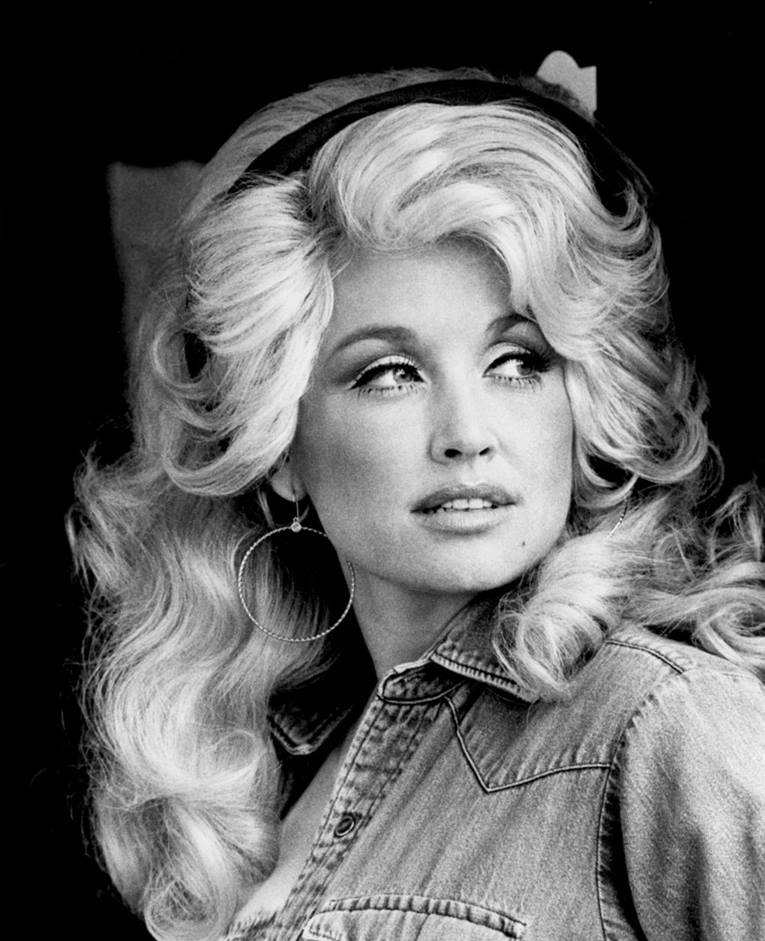
Dolly Rebecca Parton, January 19, 1946 – August 25, 2026
I have regularly explained over the years to both my fellow Tennesseans and those visiting our fair state that, despite our identity as a deep red state politically, Tennessee is not a monolith. Far from it. All of our state officials and both our senators are Republicans, but there are deep pockets of liberalism in our larger cities, so we have our fair share of Democrats. We have the extremely wealthy living in Brentwood, and the desperately poor living in the mountains of Appalachia. Tennessee is traditionally divided into three regions: West, Middle, and East. In fact, decades ago when highway travelers entered our state they were welcomed by signs that read: “The Three States of Tennessee Welcome You,” until one of our governors, Winfield Dunn, got rid of them back in the 70s. Well, you can easily get rid of the signs, but not so easily the culture. We are set firmly in the Bible Belt, but have our share of religious diversity. The largest Orthodox Jewish synagogue in the country is in Memphis. The Catholic Diocese of Knoxville has a new cathedral. The Catholic Diocese of Nashville was recently ranked the most fruitful diocese in the United States. There are no fewer than twenty Buddhist temples across the state, and every major city, and a few middling ones, has an Islamic Center. While the great majority of the state population is White, there are large populations of Blacks, mostly centered in the larger cities, and a massive influx of Hispanics and Asians into the state in recent years.
So, Tennessee is no monolith. But there is one thing that unites all Tennesseans: West, Middle, and East; rich and poor; Republican and Democrat; inner cities and mountain hollers; Catholic, Protestant, Jewish, Muslim and what have you. That one thing that unites all Tennesseans is our love for Dolly.
You can imagine, then, the sorrow that encompassed every Tennessee heart when we each in turn learned that our beloved Dolly had passed today, August 25, at the age of 80, after a long illness, the details of which remain undisclosed (which, in my mind, is how it should be). On the outside, she created the impression of a country bumpkin who got by on her charm, her talent and … um, a couple of other prominent features, as well. As she was fond of saying of herself, “It costs a lot of money to look this cheap!” But inside she possessed a brilliant mind, sharp as any, but accompanied by a heart that knew no bounds. Her love for all people, and her love for her home state and, in particular, her mountains, was effervescent. In that sense, she wore her heart on her sleeve because there was no one from whom she held back her love.
Not only was she as sharp as a tack businesswoman, but she was a philanthropist like few others. Her charitable causes included The Dollywood Foundation. Founded in 1988 originally to provide scholarships to high school youth in her home county of Sevier in Tennessee, the Dollywood Foundation expanded to fund numerous charitable causes. Dolly promised $500 to every 7th and 8th-grade student in Sevier County if they stayed in school and graduated. The dropout rate in Sevier county declined from 35% to 6% for those two classes. The Dollywood Foundation also funds the My People Fund, which provided $1000/month for six months for those whose homes were destroyed in the 2016 Sevier County fires.
Other charities Dolly supported included the children’s hospital in Knoxville. Earlier this year, East Tennessee Children’s Hospital, where I worked for thirteen years as a pediatric nurse, changed its name to the Dolly Parton Children’s Hospital after Dolly made a “generational and transformational” donation, as the president of the hospital described it. Dolly donated millions of dollars to Vanderbilt Hospital for pediatric cancer research, infectious disease research, and specialized care programs. Dolly donated seed-money that financed the development of the Moderna COVID-19 vaccine. She also donated millions to Monroe Carell Jr Children’s Hospital at Vanderbilt, where her niece was treated for leukemia.
But the charity that Dolly Parton was best known for and will forever be identified with is the Imagination Library. Founded in 1995, Imagination Library ships age-appropriate books to children up to five years old every month. All parents have to do is sign their children up. To date, according to its website, the Imagination Library has registered almost 3,200,000 children and gifted over 332,400,000 books all over the world.
Isn’t it grand that, when considering Dolly’s legacy, the first thing people think about is her incredibly generous heart! In order to earn the kind of money that Dolly donated to so many worthy causes, she had to become one of the biggest, brightest, most recognizable and bankable entertainers in the world. And she did just that, all from her hardscrabble beginnings in the mountains of East Tennessee.
Born in a one-room cabin on the banks of the Little Pigeon River in Pittman Center, Tennessee on January 19, 1946, Dolly’s family got by on her father’s sharecropping, then tobacco farming and construction work. Her family was so poor, her father, Robert Lee Parton (known as “Lee”), paid the missionary doctor who delivered Dolly with a sack of cornmeal. Her mother, Avie Lee Caroline, was often in ill health, but she mananged eleven pregnancies in twenty years, including one set of twins. Dolly Rebecca Parton was the fourth of those twelve children, and she began writing songs at the age of six and recorded her first song at the age of 11. By the time she was sixteen, she was a professional songwriter, and would go on to write more than 3000 songs over the course of her multi-decade career. After graduating from Sevier County High School in 1964, Dolly moved to Nashville the next day. On her first day in Nashville, at the Wishy Washy Laundromat, she met a young man named Carl Thomas Dean. They married two years later, in May of 1966, and their marriage lasted 59 years until Carl’s death in March 2025. Dolly will be buried next to Carl at Woodlawn Memorial Park in Nashville.
After writing songs for others, she released her first album, Hi, I’m Dolly, in 1967, the first of 50 studio albums. After a career as a child singer, Parton’s big break came in 1967 when country singer Porter Wagoner invited her to join his program, The Porter Wagoner Show. For years after, Wagoner and Parton were linked together musically and in the minds of their fans. “The Last Thing On My Mind,” their first duet, reached the top ten in 1968, beginning a ten-year streak of top-ten songs. In 1968, Wagoner and Parton were named Vocal Group of the Year by the Country Music Association. Over her career, Dolly had 25 number one songs, a record she shares with Reba McEntire for most by a female artist, and 44 top ten country albums, a record she holds on her own, and 110 career-charted singles. She won 11 Grammy Awards. But that was only for her singing. Dolly demonstrated considerable acting chops in movies such as Steel Magnolias, 9 to 5, and The Best Little Whorehouse in Texas. She was nominated for two Academy Awards, six Golden Globes, and a Tony Award. She was honored with the Jean Hersholt Humanitarian Award in 2026.
Her list of greatest hits is long: “Joshua,” “In the Good Old Days (When Times Were Bad),” “Love Is Like a Butterfly,” “Here You Come Again,” “Islands in the Stream” with Kenny Rogers, “A Hard Candy Christmas,” and so many others. But her three signature songs were “Jolene,” her first big hit, “Coat of Many Colors” that told the story of her family’s poverty growing up in the mountains of East Tennessee and, of course, “I Will Always Love You.” Dolly wrote “I Will Always Love You” in honor of Porter Wagoner when she left his show in 1974. Wagoner had been her singing partner for many years and the man who invested in her, giving her her first big break in entertainment and supporting her throughout. The song became a huge hit for Dolly after she sang it to Burt Reynolds in the cult favorite The Best Little Whorehouse in Texas in 1982. It became an even more massive hit for Whitney Houston when she sang it to Kevin Costner in the 1992 hit movie The Bodyguard. When Dolly wrote the song it was known that Elvis Presley wanted to record it. Dolly was in favor of this, until she learned that Elvis’ manager, Colonel Tom Parker, informed her that she would have to hand over half the publishing rights to the song to Elvis. She refused, Elvis never recorded the song, and Dolly went on to earn millions on royalties to the song, half of which she would have been obliged to turn over the Presley’s estate had she agreed to Elvis recording it. Given that this was the mid-70’s and Dolly was not quite yet the internationally recognized star she later became, turning down Elvis recording one of your songs took a lot of courage, confidence, and business savvy. Bottom line: Dolly knew what she had with “I Will Always Love You,” and she wasn’t about to give it away, even to “the King” himself!
In the years since, Dolly became an international recording artist, one of the most recognizable, popular, and respected personalities in the entertainment industry. Again, it says something that, when people first think of Dolly’s legacy, they think first about her philanthropy and abounding charity and love for everyone, and then about her music.
Oh, and one more thing: If you ever get the chance to visit the Great Smoky Mountains National Park, do so. It is well worth it. The Smokies is home to the largest variety of plant and animal life of any national park in the country, counting over 22,000 species. The mountains are beautiful. But it also has Dollywood, the theme park that Dolly and her business associates invested in and called “Dollywood” in 1986, bringing thousands of jobs and a lot of fun to the region. Dollywood has a program called GROW U that pays 100% of college tuition, fees, and books for its employees. Trust me, when we first moved to East Tennessee from Memphis, just the idea of Dollywood made me think of a second or third-class amusement park that was no where near worth the price of admission. I was wrong. It’s a blast! The rides, the food, the entertianment, the atmosphere – it’s all there and it’s all great!
God bless you, Miss Dolly Parton. We will miss you. We will never forget you. We will always love you. We are so honored and proud to call you one of Tennessee’s own, perhaps the most Tennessee of Tennesseans there ever was or ever will be.
Sources: https://en.wikipedia.org/wiki/Dolly_Parton; https://people.com/dolly-parton-legacy-charity-12065985
Be Christ for all. Bring Christ to all. See Christ in all.

