First Reading: Jeremiah 20:7-9
You duped me, O LORD, and I let myself be duped;
you were too strong for me, and you triumphed.
All the day I am an object of laughter;
everyone mocks me.
Whenever I speak, I must cry out,
violence and outrage is my message;
the word of the LORD has brought me
derision and reproach all the day.
I say to myself, I will not mention him,
I will speak in his name no more.
But then it becomes like fire burning in my heart,
imprisoned in my bones;
I grow weary holding it in, I cannot endure it.
Second Reading: Romans 12:1-2
I urge you, brothers and sisters, by the mercies of God,
to offer your bodies as a living sacrifice,
holy and pleasing to God, your spiritual worship.
Do not conform yourselves to this age
but be transformed by the renewal of your mind,
that you may discern what is the will of God,
what is good and pleasing and perfect.
Gospel: Matthew 16:21-27
Jesus began to show his disciples
that he must go to Jerusalem and suffer greatly
from the elders, the chief priests, and the scribes,
and be killed and on the third day be raised.
Then Peter took Jesus aside and began to rebuke him,
“God forbid, Lord! No such thing shall ever happen to you.”
He turned and said to Peter,
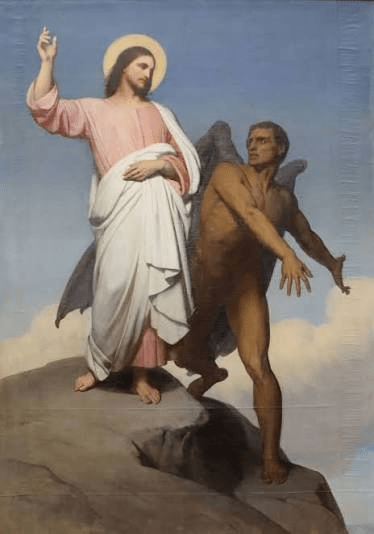
“Get behind me, Satan! You are an obstacle to me.
You are thinking not as God does, but as human beings do.”
Then Jesus said to his disciples,
“Whoever wishes to come after me must deny himself,
take up his cross, and follow me.
For whoever wishes to save his life will lose it,
but whoever loses his life for my sake will find it.
What profit would there be for one to gain the whole world
and forfeit his life?
Or what can one give in exchange for his life?
For the Son of Man will come with his angels in his Father’s glory,
and then he will repay all according to his conduct.”
I certainly relate to the prophet Jeremiah in our first reading. Jeremiah was called to be a prophet, and he accepted that call. But he didn’t realize that, when enters any relationship with God, that relationship is on God’s terms, not ours. In that way, God is sort of like a cat. Everyone who has ever had a cat knows that one’s relationship with a cat is always on the cat’s terms. There are advantages to that. We can leave our cats for a weekend and, so long as there’s enough food and water out, they’ll be fine. When we come home, their response is likely to be, “Oh, were you gone?” The difference with God is that God knows when you’re gone, and He keeps up with you when you leave Him. No matter how far you move away from God, if you want to come back to Him, all you need do is turn around, and He’s there. You don’t have to go all the way back to the spot where you first left God behind. All you need to do is turn around. God has been keeping up with you throughout.
St. Teresa of Avila was one day praying in the chapel of her convent. While in prayer, she saw a vision of Jesus. She contemplated the vision for some time and, after doing so, shouted, “Begone, Satan!” Immediately, the vision of Jesus dissipated, and there before her was Satan himself. “How did you know it wasn’t really Jesus?” Satan asked her. Teresa replied, “No wounds! No wounds!” You see, the father of lies had appeared to Teresa in the image of Jesus, but with no wounds in His hands, feet, or side. As such, Teresa knew it wasn’t really Jesus. The real Jesus has wounds, and He kept them even after His resurrection.
Why did Satan appear before Teresa as Jesus with no wounds? Because that is the Jesus Satan wants us to follow. That is the Jesus Satan wants us to adore and imitate – the Jesus with no wounds; the Jesus Who did not suffer; the Jesus who sacrificed nothing for us and so expects nothing of us. “Don’t make being a Christian so hard. Don’t be a drama queen! Live your life. Be nice. Be tolerant of others. Don’t worry about the poor, the naked, the infirm, the imprisoned, or the hungry. What can you do for them, anyway? Don’t worry about bothering others with the good news you have received, or the graces with which you’ve been blessed. You’ll only make yourself a nuisance to others, and they’ll think you rude. Don’t worry about sacrificing or suffering. Who needs all of that? All it does is make you miserable. Don’t worry! Be happy!”
Just so, when Peter heard Jesus talk about going to Jerusalem, about suffering, and being killed, Peter rebuked Him. Peter, who had just recognized Jesus as the Messiah, the Son of God, didn’t understand that the Son of God had to suffer to save us from the chains of sin and death. How could it be? Jesus is the Messiah! Isn’t the Messiah supposed to come and set everything right? Isn’t He supposed to conquer sin and death with His mighty arm and powerful sword? Why, then, is Jesus talking about suffering and being killed?
Jesus tells Peter, “You are thinking not as God does, but as men do.” Jesus tells him, “Get behind me, Satan!” He calls Peter “Satan,” because Peter wants a Jesus with no wounds! He doesn’t understand how God’s plan of redemption works. He thinks that, being God’s Son, Jesus can just snap His fingers and make everything better. Isn’t that still an obstacle for so many who question the wisdom of God’s plan of salvation? “Why did Jesus have to die? Why couldn’t God just have fixed everything by His will? He’s God, after all. Can’t He do whatever He wants. Why did Jesus have to die to conquer sin and death?
To destroy sin, Jesus became sin. Jesus became sin on the cross, so when Jesus died on that cross, sin died on that cross. Sin has no life left in it, except that which we choose to give it. But we are not compelled or impelled to sin. We can freely choose not to sin. We have that power, because sin is nothing more than a ghost of its previous self. Having died on the cross with Jesus, sin has no power over us except, again, that which we choose to give it? But why would we choose to empower the ghost of a former life, of a life that meant separation and alienation from our Father in heaven. Such a life is no life at all. In destroying sin by becoming sin and dying on the cross, Jesus has affected the death of sin, so that sin, of itself, has no power over us.
I was asked this question once: Why did Jesus have to die? It came to me that the most effective way to conquer an opposing kingdom is by infiltration. That’s how the Greeks conquered Troy, remember? They built a wooden horse, then climbed inside. After the Trojans brought the horse inside their gates and went to bed for the night after celebrating that the Greeks had left, the Greeks hiding inside the horse climbed out, opened the gates for their comrades, and the Greeks destroyed the city of Troy.
To conquer the kingdom of death, Jesus died on the cross. In other words, He entered the kingdom of death and conquered it from within. How did He do this? By freely choosing to enter the realm of death, and then freely walking out by His own power, on His own terms! Death has no more power over Him and, as heirs to His kingdom, no power over us. Death is now our ally. Death now flies our flag. The death we experience is nothing more than the portal through which we enter the next aspect of our eternal life. Just as a babe in her mother’s womb passes through the birth canal to enter a new and more expansive aspect of our lives, so by Jesus’ victory over death, death is now nothing more than the portal through which we enter the next aspect of our eternal life. Death, then, is nothing to fear, nothing to avoid, nothing to lament. It is, rather, the friend who carries us to a deeper, more intimate experience of our life with God.
This is, I think, part of the transformation St. Paul calls us to in his Letter to the Romans. Our minds are to be renewed, our thinking transformed from the way men think to the way God thinks. Our bodies, rather than simply belonging to us, more truly belong also to God, our spiritual worship. We are called, then, to offer even our own bodies as a living sacrifice, holy and pleasing to God.
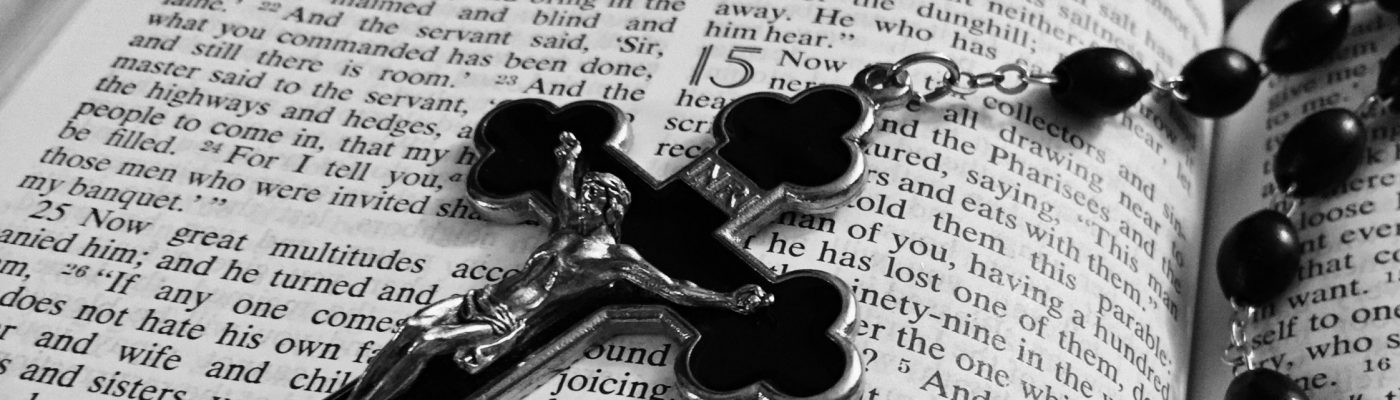
Our thinking must be transformed, as well, from a desire for a Jesus with no wounds to an acknowledgement of redemption through suffering, through sacrifice, through giving of ourselves for the sake of the other. We enter into covenant with our God at our Baptism, and pledge ourselves to participate in the redemptive mission of Jesus. Covenant requires sacrifice, and sacrifice requires blood – emotional blood or sometimes even physical blood. We offer our sacrifice when we unite our sufferings, such as they are, with those of Christ on the cross. In this way our own sufferings become efficacious for redemption. We also offer our sacrifice when we participate in the one sacrifice of Christ made present on the altar at every Mass. At every Mass, the one sacrifice of Christ is made present on the altar so that those gathered throughout the centuries may participate in that one sacrifice and, in doing so, participate in the redemptive mission of Jesus Christ. This is the call given to us by Jesus. “Do this in remembrance of me.”
This is our hope. This is our destiny. This is the promise of Jesus. If we remain loyal to Him, if we take up our cross and follow Him, if we unite our sufferings with those of Christ on the cross, if we put our faith in the joy of the resurrection, then we will share in His glory. This is our hope. This is our destiny. This is the promise of Jesus. And Jesus keeps His promises.
Be Christ for all. Bring Christ to all. See Christ in all.

