
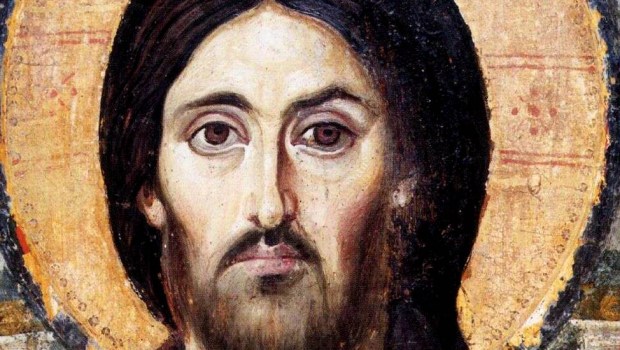
Who was Jesus of Nazareth? Many of our contemporaries regard Him as a great prophet, perhaps. Certainly they regard Him as a great moral teacher, the Rabbi of rabbis, if you will. They consider His message to be one of peace, love, harmony and, perhaps the most important of such qualities in our day and age, tolerance. People are weirdly drawn to Jesus, even if they’ve never read the New Testament or His teachings. Perhaps they saw the movie. But, for a whole variety of reasons, everyone wants Jesus on their side. Conservative or liberal. Democrat or Republican. Capitalist or socialist or communist. Christian humanist or secular humanist. Gay or straight. Black, white, brown, what have you. Everybody sees in Jesus one whom they regard as a great moral teacher, one who taught with authority, so that to have Jesus on your side is to establish your credibility as someone who should be listened to.
The Church goes deeper in her understanding of Jesus of Nazareth. From her very beginnings, the Church has claimed that Jesus of Nazareth, the man who was born in Bethlehem, whose family fled to Egypt then returned to Galilee, who learned His father’s trade of carpentry and supported Himself for many years in the business, then abruptly abandoned the business and became an itinerant preacher and healer, who was arrested by the religious authorities of His day and condemned to die for blasphemy, and who was executed by the civil authorities of His day – that this man was the living God of the universe made flesh. The Second Person of the Holy Trinity – co-eternal, co-equal, co-everything with the Father and the Holy Spirit – God Himself, came down from His exalted throne to take on flesh in the womb of a teenage virgin. The result of this was the man Jesus of Nazareth.
Was Jesus God? Our contemporary world, and even some biblical scholars and theologians who claim the Christian tradition as their own, are not too keen on the idea of Jesus being God. They like the Jesus who teaches to love everyone, keep peace with everyone, live in harmony with everyone, and be tolerant of everyone. People generally picture Jesus according to their own agendas. I’m sure many MAGA types think of Jesus as a good American. I’m sure many Progressive types figure Jesus hates Republicans as much as they do. I recall visiting the chapel of the Society of African Missions, where to the crucifix was nailed a Black African Jesus. My friend asked, “They picture Him as an African. Can they do that?” I replied, “Why not? We picture Him as a White, Anglo-Saxon Protestant!” We all have an image of the Jesus we like, regardless of how well that image syncs with the Jesus of the New Testament. Most people who want Jesus on their side, let’s be frank, likely haven’t read the New Testament.
But the four Gospels of the New Testament are really the only possibly reliable sources we have of Jesus of Nazareth. Yes, there are the Gnostic Gospels, but those were written centuries after Jesus, and the depiction of Jesus in the Gnostic Gospels is not the one you would look to to dispute the notion that Jesus is God, because in the Gnostic Gospels Jesus is more God (if one can speak so) than in the canonical Gospels, and very little about Him is human. Now, there are some who claim that the four canonical Gospels are not reliable, because they’re written by men of faith from the perspecctive of Christian faith. Well, yes, they are. Even still, unless something shows up in the on-going archeological digs that take place in the Holy Land, the four canonical Gospels are what we have on Jesus from the first century, the earliest writings on the man and His mission.
Over the next few days, I’m going to explore the testimony from the New Testament that points to others calling Jesus God, or Jesus claiming to be God Himself. Then I’ll consider what some of the Church Fathers have to say about Jesus being God. Then I’ll consider what the Church in council has had to say about Jesus being God. All in the effort to answer the question: Did the early Church believe that Jesus was God?
Notice, I didn’t say the question was, “Did Jesus believe He was God?” We can’t interview Him, so we really can’t answer that question. But those who knew Him and walked with Him and heard His teachings and witnessed His mighty deeds: their voices are captured in the pages of the New Testament, in particular in the Gospels. They testify to what Jesus taught, what He did, and what He claimed about Himself. From that we can get a pretty good picture, I think, of what Jesus thought of Himself, and of how He thought of Himself. The question is: Was Jesus of Nazareth God? We’ll see what Scripture, the Church Fathers, and the Church in council has to say about it.
Be Christ for all. Bring Christ to all. See Christ in all.

